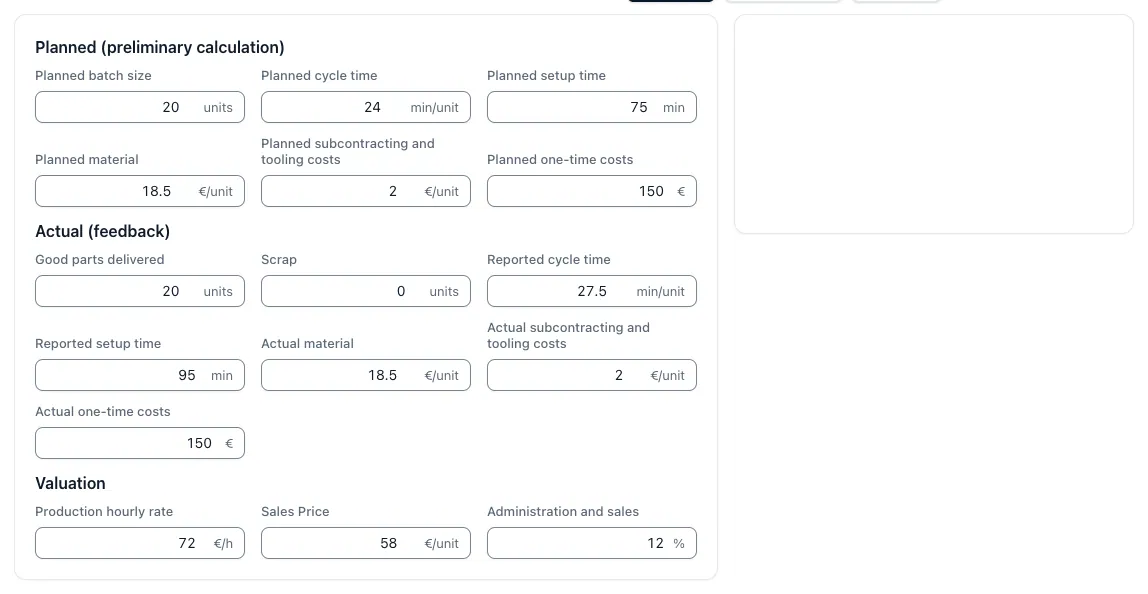
From planned/actual deviations, comprehensible improvements become
A should-be comparison for CNC times starts with a unique assignment. The calculated time must fit the actual job, the correct component revision, batch size, machine and work sequence. Equally important is the definition of the measured time: A BDE feedback can differentiate between setups, editing, testing, waiting or malfunctions differently. If these terms are combined unchecked, a difference arises, but no reliable statement about the calculation quality.
The system compares similar time types and marks missing or contradictory information. Professional personnel then assesses the cause: Was the material different, a tool worn, the machine occupied, a drawing unclear or the number of pieces different? A one-time standstill must not have the same influence as a regularly set aside time. Comments and approvals determine this classification for later evaluations.
The result is a comprehensible deviation analysis per reference case. It shows which position is affected, which source has delivered the actual value and whether an adjustment is recommended, rejected or initially observed. Only several technically comparable cases can indicate that machine parameters, tool data or a calculation rule should be systematically corrected. After a released change is measured again; the previous status remains available for comparison and withdrawal.
A single actual time proves neither the correctness nor the weakness of a time model. Incomplete BDE bookings, collective orders, rework and undocumented interruptions limit the statement. Also, a calibration must not be transferred unchecked to other machines, materials or parts classes. In a first conversation, therefore, time definitions, data sources and responsibilities are clarified. After that, it can be decided which process area is suitable for a clean target-actual run.
Result of the application
"Compare calculated and real manufacturing times" combines existing data with a clear decision and a visible result.
Use the same time terms
Setup, main, side and interruption times are cleanly separated from each other.
Technically explain deviations
Disorder, master data errors and systematic model deviation are not mixed.
Check Calibration
Changes only apply to the tested parts and process area.