Machines, materials and cutting data of own operation
Realistically depicting machines
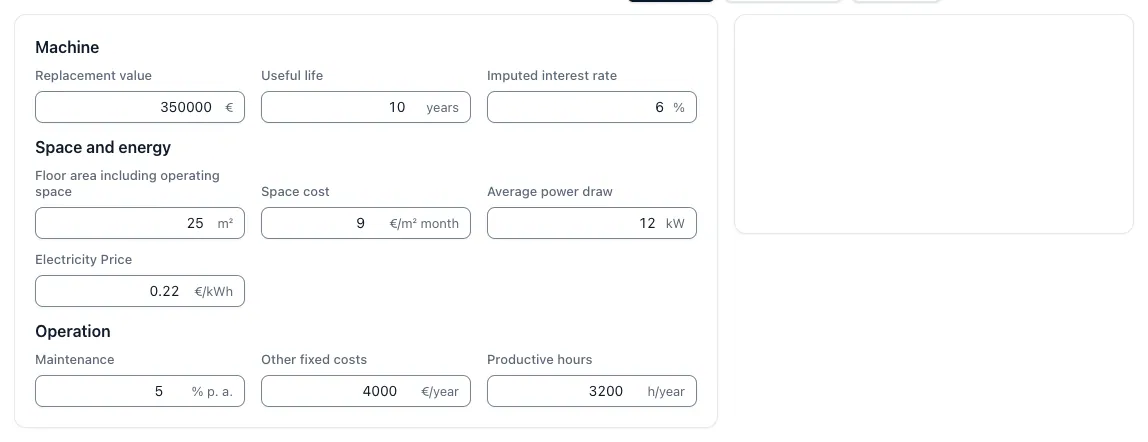
The same component can cause significantly different times and costs on two machines. CNC Kalkulator therefore works with the concrete master data of your operation. Driveways, spindle power, speed, dynamics, tool changes and typical non-cutting times are stored in machine profiles and used for the released calculation range.
Maintain material data centrally
The material database is built-in: material number, short name, further designations, material group, standard and density are available for each calculation without anyone typing it. Own prices and densities overwrite the default values only where your operation stores them; without a specific specification the calculation calculates the densities of the built-in database, and a material price per kilogram comes from your own prices or from the individual calculation. The page Material database shows how material numbers are constructed and which values the public database contains: material number, short name and density.
Suppliers of rod and plate material can be supplied with price lists and monthly alloy surcharges. The procurement level calculated from these prices is stored invariably with the date of calculation; a later change in price does not change it. Thus, it remains comprehensible which material price was expected to be offered. Uniform material designations and synonyms prevent similar materials from being accidentally treated the same; comparison names with the addition "(similarly)--are not an exchange release.
Cut data and tools
Tool and material data are also kept operationally specific. A tool profile combines dimensions and limits with the released cutting values for a material group. Manufacturer recommendations can serve as a starting point and can be supplemented with your practical experience values.
Versions and validity
A complete calculation basis also includes machine hourly rates as well as defined times for tool changes, touch or check. All relevant values are given a version and a validity period. An update thus affects new calculations without altering already completed offers afterwards.
The structure starts with the frequently used machines, tools, materials and parts families. Lack of information remains openly recognizable until they are confirmed by the technical standards. This gradually creates a central operating basis that replaces personal tables and allows calculation, work preparation and production management to work with the same comprehensible data.
Benefits for your team
Operational master data reduces search work, makes assumptions comprehensible and creates a reliable basis for the offer.
Realistically depicting machines
Driveways, spindles, dynamics, tool changes and non-cutting times flow into the machine.
Targeted use of cutting data
Tool, material group and shared area of application are brought together appropriately.
Controlling changes
Versions and validity data keep new and earlier calculations understandable at all times.