Use historical offers as a reliable reference for new CNC requests
Historical offers contain valuable calculation knowledge – but only if it is understandable under what conditions they have been created. An old unit price does not say much if part revision, lot size, material price, machine or capacity utilization are missing. CNC Kalkulator supports CNC paymakers in linking offer data with the associated technical information and, where available, the real order result.
Fields from ERP, tables or documents are assigned to offer, position, component, revision, quantity, machine and time type. Units and designations are unified, possible duplicates and gaps remain visible. Tested cases receive a release status for the active reference search. Incomplete old data can be found, but are not treated as confirmed experience values.
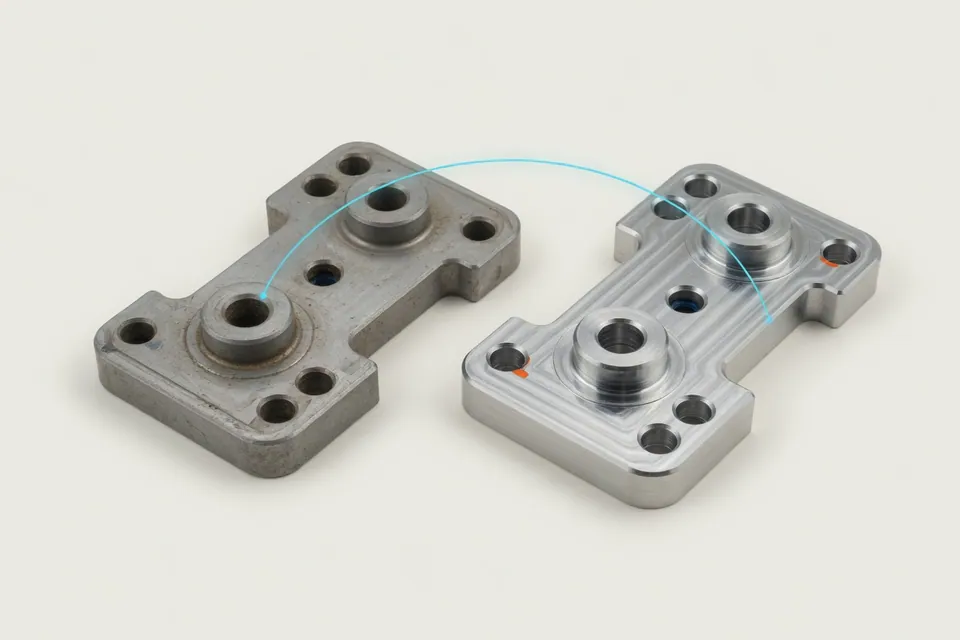
In a new request, material, manufacturing processes, part characteristics, lot size and machine context help to narrow down suitable comparison cases. A hit shows the documents, assumptions and results known at that time. A new revision, tighter tolerances, other semi-finished products or an additional clamping can significantly change the effort. Therefore, the reference results in a separate calculation level; the previous price is not automatically taken over.
How well the search supports depends directly on the quality and allocation of the imported data. Missing CAD files, inconsistent time types or undocumented price decisions cannot be safely reconstructed. Market prices and material costs must also be evaluated at the moment. The solution identifies which experience is resilient, which serves only as an indication and which assumptions must be technically released before re-use.
Use existing experience safely
Not the old price counts, but the documented context behind it.
Assigning offer data
Documents and ERP data receive a clear technical and commercial context.
Marking data quality
Origin, completeness and release status determine how a reference may be used.
Reexamine assumptions
A historical calculation starts a comparison, but does not replace a current evaluation.